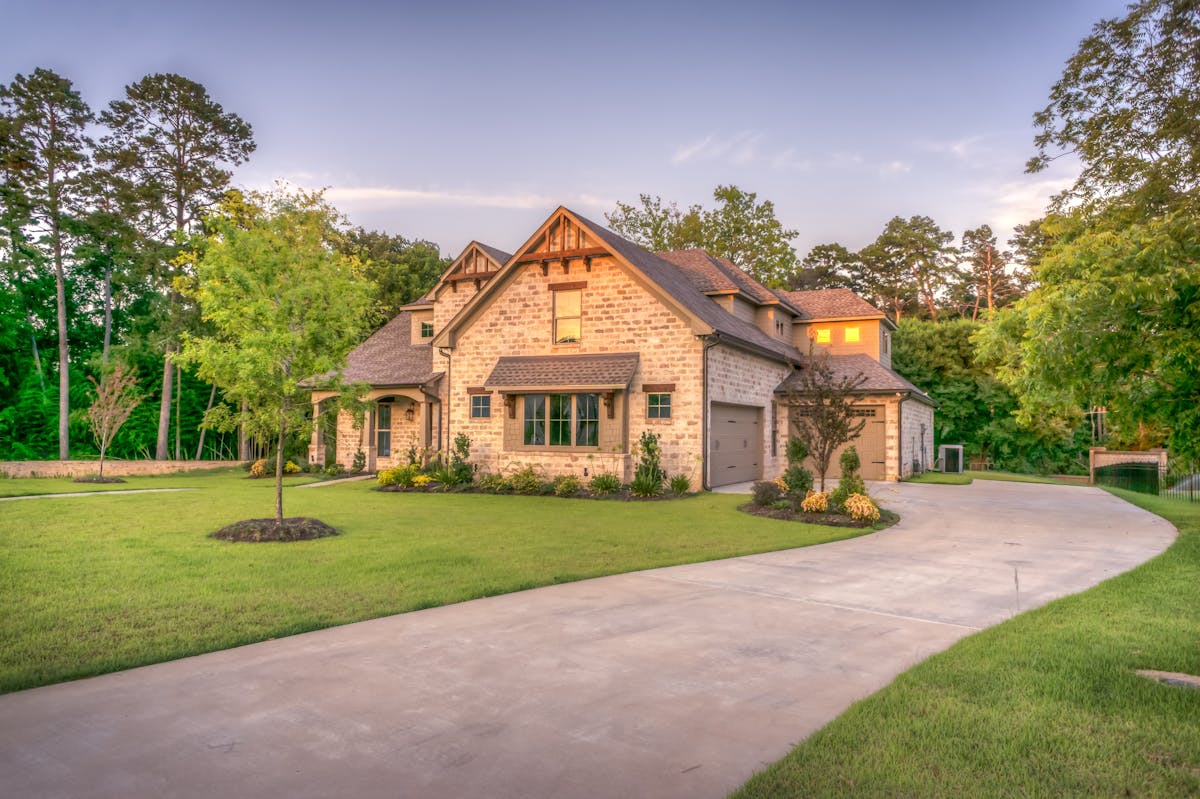
Bicester Eco-Town extension — 95 plots — UK new build solar PV installation
Eco-town · Bicester

Bicester Eco-Town extension — 95 plots

95-plot extension delivered with PassivHaus-influenced air permeability under 2

95
Total plots
1.8
Air permeability achieved
4.4 kWp
PV per plot (avg)
A average
EPC band achieved

NW Bicester Phase 2. All-electric specification from outset — ASHP heating, MVHR, 4 kWp+ solar PV on every plot. PassivHaus-influenced detailing achieved 1.8 m³/(h·m²) air permeability — well below FHS target.

The brief

NW Bicester is one of the UK's flagship eco-towns, originally consented in 2014 with a sustainability remit baked into the masterplan. Phase 2 of the development (95 plots, delivered through 2025-2026) required FHS-equivalent specification from outset (~2 years ahead of the regulatory mandate) with PassivHaus-influenced fabric detailing to maximise EPC scores for sale and to meet the masterplan's "zero-net-carbon" branding. Site developer: a SME builder specialising in low-carbon volume work.

Fabric and air permeability approach

Wall U-value target 0.13 (below FHS 0.15), roof 0.10 (below FHS 0.11), floor 0.10 (below FHS 0.11). External wall buildup: 102.5 mm brick outer skin + 200 mm full-fill PIR cavity + 100 mm concrete inner skin + 12.5 mm plasterboard. Triple-glazed windows throughout (Internorm KF410 timber-aluminium). Air permeability target 2 m³/(h·m²) — achieved 1.8 average across the 95 plots through deliberate sealing detail at every penetration, taped membrane junctions at eaves and party walls, and pre-tested service penetrations.

Solar PV and ASHP integration

In-roof 4.0 kWp arrays on the 3-bed semi types (60 plots), 5.0 kWp on the 4-bed detached types (35 plots). REC Alpha Pure 405W panels — premium efficiency to maximise generation from limited roof area on the terraced plots. Daikin Altherma 3 R 6 kW ASHPs throughout, paired with 200L hot water cylinders and Loxone smart home controls. Heat loss design figure averaged 2.4 kW per dwelling (vs ~5.5 kW for a 2013-spec equivalent) — letting ASHPs operate efficiently at modulating output.

MVHR integration and indoor air quality

Mechanical Ventilation with Heat Recovery (Zehnder ComfoAir Q450) on every plot — effectively required at the air-permeability target of 1.8. MVHR units installed in roof voids with ducting concealed in service zones. Heat recovery efficiency averaged 91% (manufacturer spec 92%) — measured during commissioning. CO₂ levels in occupied test plots monitored over the first 12 months: average 580 ppm (well below the 1,000 ppm comfort threshold).

Modelling results and Building Control

Full SAP 10.3 and HEM modelling. DER averaged 6.2 kgCO₂/m²/yr (vs TER of 8.4) — 26% margin to compliance. Average SAP score 95 (top of band A); 12 plots scored 97+. Building Control sign-off (LABC route) achieved within 10 days of completion on every plot — faster than typical due to thorough compliance file preparation.

Outcomes and template impact

Average annual electricity bill across the first 30 occupied plots (12-month tracking): £680/yr (vs ~£2,100/yr typical for an equivalent 2013-spec home). 86% reported bills below expectation. Air-permeability detail rolled forward into the developer's standard house-type library for non-Bicester sites (3 further developments on similar PassivHaus-influenced detail in pipeline). The Bicester team's ratio of compliance work to construction labour proved a useful internal benchmark.


40% of ground floor area
PV / ground floor area
Mar 2027
FHS in force
75%
CO₂ vs 2013 baseline
£4,350 per dwelling
Per-plot premium
For developers and housebuilders

The eco-town segment for volume new-build programmes

Per-plot pricing locked at procurement. Factory pre-fit on panelised roof cassettes. SAP/HEM modelling for every house type included. NHBC, LABC, Premier and Buildmark warranty-accepted workmanship. 20-year insurance-backed system warranty. We work with developers from 50 plots to 5,000+ across multi-site frameworks — agreed pricing, agreed programme, agreed warranty stack.

How this fits into the FHS compliance pathway

Every FHS-compliant new build must pass three regulatory gates. The eco-town segment fits primarily into the second gate — design-stage Part L compliance — but has knock-on implications for Building Control sign-off and post-completion warranty:

  1. 1
    Planning permission Most solar PV on new dwellings is consented within the dwelling\'s primary planning consent. Conservation Areas, Article 4 directions and listed-curtilage plots require additional planning consideration — we handle the planning evidence required for these.
  2. 2
    Building Control — Part L compliance SAP 10.3 or HEM compliance modelling demonstrating Dwelling Emission Rate ≤ Target Emission Rate. PV specification, ASHP capacity, fabric U-values and air permeability all entered into the modelling. We provide the full compliance file ready for the Approved Inspector.
  3. 3
    Post-completion — warranty & EPC MCS certificate, EPC, monitoring app onboarding and 20-year insurance-backed workmanship warranty. NHBC, LABC, Premier and Buildmark all accept our installation specification without query — important if you\'re relying on a structural warranty for buyer mortgageability.

For a fuller walkthrough of the compliance process, see our Part L 2026 page and the FHS PV calculator which sizes a compliant system from your ground floor area in 30 seconds.

Frequently asked

Developer & contractor questions

Answers to the questions we get most often when discussing the eco-town segment with new clients.

How does FHS affect per-plot pricing for volume housebuilders?
Per-plot pricing is the dominant procurement model for FHS-compliant solar across UK housebuilders. The typical structure is a fixed per-plot price (covering supply, install and warranty) negotiated at land-bid stage, locked with inflation cap to a delivery window of 24–36 months. For a typical 3-bed semi, volume per-plot prices in 2026 run £4,800–£5,600 depending on site size, plot mix and supplier framework. Above 500-plot bulk orders unlock further discount through factory pre-fit programmes.
What's the contractor risk of getting FHS specification wrong?
Material — both at completion (Building Control refusing sign-off) and post-completion (NHBC reserving warranty against undersized systems). Specifications below the deemed-to-satisfy 40% PV threshold require enhanced fabric calculation backing in the SAP/HEM file. We see contractors most often caught out on (a) air permeability — design target of 3 missed at 5–6 due to detail failures; (b) ASHP sizing mismatched to building heat loss; (c) PV array placement that doesn't hit the 40% requirement on geometry grounds.
When does the Future Homes Standard come into force?
24 March 2027 in England, with a 12-month transitional period running to 24 March 2028 for projects already under construction. The Approved Documents L and F were published on 24 March 2026 (Government statement HCWS1445), giving the industry exactly 12 months of certainty before regulatory commencement. Scotland, Wales and Northern Ireland are following with broadly equivalent regulations on roughly aligned timetables, although devolved nuances apply — Welsh regulations are typically 6 months ahead.
What does FHS-compliant solar PV actually cost per plot?
The Government Impact Assessment puts the total FHS premium at ~£4,350 per dwelling per dwelling (2025 prices, weighted average across heat pump, solar PV, MVHR and enhanced fabric). Of that, solar PV is roughly £4,200 — covering ~3.4 kWp for a typical 3-bed semi (panels, in-roof mounting, inverter, monitoring, MCS certification and 20-year insurance-backed warranty). Larger dwellings cost proportionately more; volume procurement reduces per-plot cost by 20–25%.
FHS 2027 deadline approaching

Get an FHS-compliant solar quote in 48 hours

Tell us your plot details — ground floor area, location and target start-on-site date. We return a fully-costed system sized to Part L 2026 (40% PV rule), with the SAP/HEM compliance pack included.