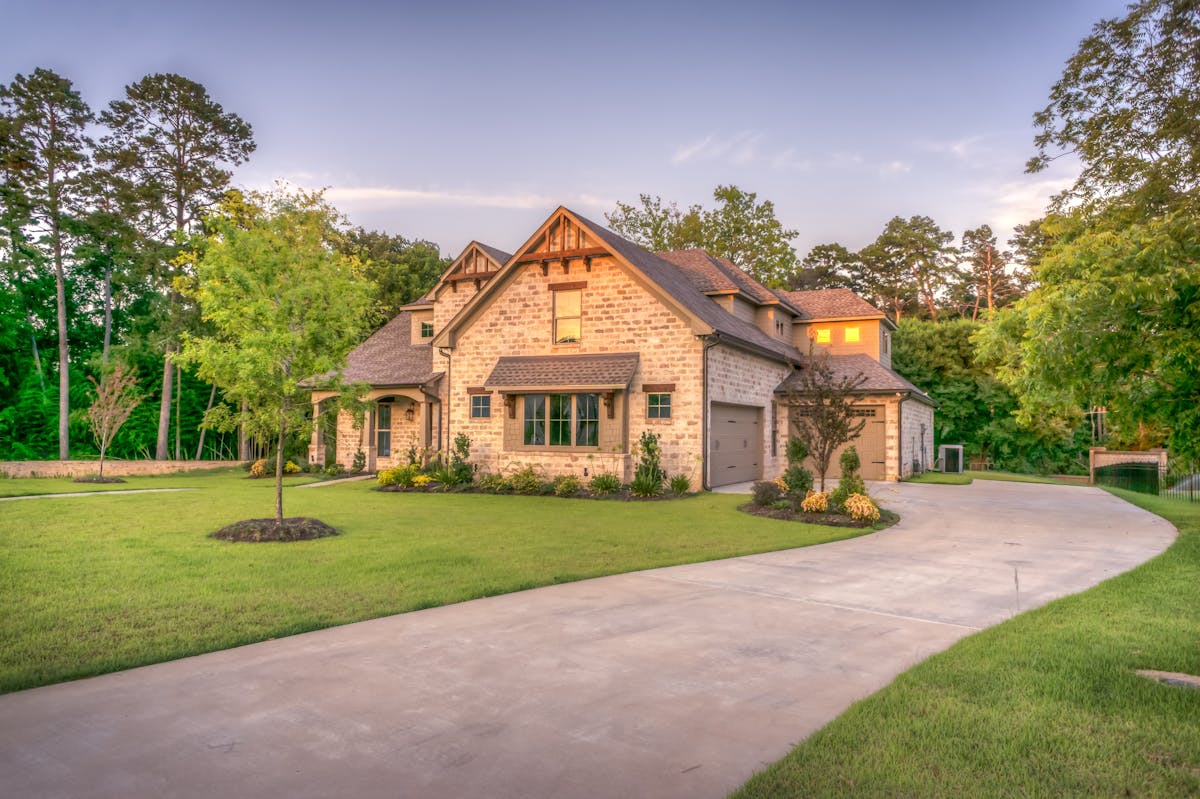
Manydown Garden Communities — 120-plot first phase — UK new build solar PV installation
Volume developer · Basingstoke

Manydown Garden Communities — 120-plot first phase

Mixed in-roof and BIPV solar tile on 3,400-home garden community first phase

120
Total plots
12
BIPV plots
486 kWp
PV capacity installed
4.05 kWp
Avg system size

Urban&Civic-led 3,400-home Garden Community. First phase 120 plots delivered to FHS-equivalent spec from outset. Mix of detached, semi and townhouse types with BIPV solar tiles on 12 architect-led plots.

The brief

Manydown is a 3,400-home garden community on the western edge of Basingstoke, led by Urban&Civic in partnership with Hampshire County Council and Basingstoke & Deane Borough Council. The first phase of 120 plots was specified to FHS-equivalent standard from concept, ahead of the regulatory deadline. 12 plots within the architect-led "design code" zones — premium plots adjacent to the central village green — required BIPV solar tiles rather than conventional panel arrays to satisfy the master-plan aesthetic.

House types and split specification

108 conventional plots: 60 × 3-bed semi (3.4 kWp Marley SolarTile in-roof), 28 × 4-bed detached (5.2 kWp Marley SolarTile in-roof), 20 × 4-bed townhouse (4.8 kWp Marley SolarTile in-roof — small array constrained by terrace footprint). 12 design-code plots: 6 × 4-bed detached (4.0 kWp GB-Sol PV Slate), 6 × 5-bed detached (5.6 kWp GB-Sol PV Slate). All paired with 5 kW Vaillant aroTHERM plus ASHPs and 8 kWh battery storage.

Pricing and design-code BIPV premium

Per-plot pricing differentiated by system type with locked-in inflation cap to end-2028. Conventional in-roof Marley SolarTile: £4,200/plot installed. BIPV PV Slate plots: £8,400/plot installed — a £4,200 premium reflecting the higher slate unit cost (£2,750/kWp installed BIPV vs £1,250/kWp installed in-roof panel). The premium was absorbed into the design-code plot sale prices (£625k–£795k vs £435k–£525k conventional plot prices) so the developer's margin was protected.

Design code integration and aesthetic review

SAP/HEM modelling fed back into the master-planner's design-code reviews. PV slate plots demonstrated indistinguishable from non-PV plots at the 50m visual range standard used by the master-planning team. Design code reviewed and approved without amendment in Q3 2025. Process produced a "BIPV-eligible plot type" addendum to the design code, allowing Phases 2-15 to specify BIPV on similar design-sensitive plots without separate review.

Procurement efficiency and Phase 2

Bulk procurement of Marley SolarTile units (108 systems totalling 408 kWp) secured a 12% discount on list pricing — passed through into the per-plot cost. GB-Sol PV Slate units procured directly from the Welsh manufacturer with 8% volume discount. Phase 2 procurement (220 plots, due Q4 2026) secured at 8% lower per-plot rate across both system types, reflecting the bulk delivery efficiency demonstrated in Phase 1 and the developer's repeat-order standing.

Buyer outcomes and post-completion

EPC scores: conventional plots averaged 88, BIPV plots averaged 89 (slightly higher due to design-code plots' larger window glazing balanced by tighter fabric). Average annual generation: conventional 3-bed semi ~3,200 kWh, BIPV 4-bed detached ~3,600 kWh. Buyer feedback panel (first 30 plots, 6-month follow-up): 92% reporting bills below expectation; 88% reporting heat pump comfort as good or excellent.

40% of ground floor area
PV / ground floor area
Mar 2027
FHS in force
75%
CO₂ vs 2013 baseline
£4,350 per dwelling
Per-plot premium
For developers and housebuilders

The volume developer segment for volume new-build programmes

Per-plot pricing locked at procurement. Factory pre-fit on panelised roof cassettes. SAP/HEM modelling for every house type included. NHBC, LABC, Premier and Buildmark warranty-accepted workmanship. 20-year insurance-backed system warranty. We work with developers from 50 plots to 5,000+ across multi-site frameworks — agreed pricing, agreed programme, agreed warranty stack.

How this fits into the FHS compliance pathway

Every FHS-compliant new build must pass three regulatory gates. The volume developer segment fits primarily into the second gate — design-stage Part L compliance — but has knock-on implications for Building Control sign-off and post-completion warranty:

  1. 1
    Planning permission Most solar PV on new dwellings is consented within the dwelling\'s primary planning consent. Conservation Areas, Article 4 directions and listed-curtilage plots require additional planning consideration — we handle the planning evidence required for these.
  2. 2
    Building Control — Part L compliance SAP 10.3 or HEM compliance modelling demonstrating Dwelling Emission Rate ≤ Target Emission Rate. PV specification, ASHP capacity, fabric U-values and air permeability all entered into the modelling. We provide the full compliance file ready for the Approved Inspector.
  3. 3
    Post-completion — warranty & EPC MCS certificate, EPC, monitoring app onboarding and 20-year insurance-backed workmanship warranty. NHBC, LABC, Premier and Buildmark all accept our installation specification without query — important if you\'re relying on a structural warranty for buyer mortgageability.

For a fuller walkthrough of the compliance process, see our Part L 2026 page and the FHS PV calculator which sizes a compliant system from your ground floor area in 30 seconds.

Frequently asked

Developer & contractor questions

Answers to the questions we get most often when discussing the volume developer segment with new clients.

How does FHS affect per-plot pricing for volume housebuilders?
Per-plot pricing is the dominant procurement model for FHS-compliant solar across UK housebuilders. The typical structure is a fixed per-plot price (covering supply, install and warranty) negotiated at land-bid stage, locked with inflation cap to a delivery window of 24–36 months. For a typical 3-bed semi, volume per-plot prices in 2026 run £4,800–£5,600 depending on site size, plot mix and supplier framework. Above 500-plot bulk orders unlock further discount through factory pre-fit programmes.
What's the contractor risk of getting FHS specification wrong?
Material — both at completion (Building Control refusing sign-off) and post-completion (NHBC reserving warranty against undersized systems). Specifications below the deemed-to-satisfy 40% PV threshold require enhanced fabric calculation backing in the SAP/HEM file. We see contractors most often caught out on (a) air permeability — design target of 3 missed at 5–6 due to detail failures; (b) ASHP sizing mismatched to building heat loss; (c) PV array placement that doesn't hit the 40% requirement on geometry grounds.
When does the Future Homes Standard come into force?
24 March 2027 in England, with a 12-month transitional period running to 24 March 2028 for projects already under construction. The Approved Documents L and F were published on 24 March 2026 (Government statement HCWS1445), giving the industry exactly 12 months of certainty before regulatory commencement. Scotland, Wales and Northern Ireland are following with broadly equivalent regulations on roughly aligned timetables, although devolved nuances apply — Welsh regulations are typically 6 months ahead.
What does FHS-compliant solar PV actually cost per plot?
The Government Impact Assessment puts the total FHS premium at ~£4,350 per dwelling per dwelling (2025 prices, weighted average across heat pump, solar PV, MVHR and enhanced fabric). Of that, solar PV is roughly £4,200 — covering ~3.4 kWp for a typical 3-bed semi (panels, in-roof mounting, inverter, monitoring, MCS certification and 20-year insurance-backed warranty). Larger dwellings cost proportionately more; volume procurement reduces per-plot cost by 20–25%.
FHS 2027 deadline approaching

Get an FHS-compliant solar quote in 48 hours

Tell us your plot details — ground floor area, location and target start-on-site date. We return a fully-costed system sized to Part L 2026 (40% PV rule), with the SAP/HEM compliance pack included.