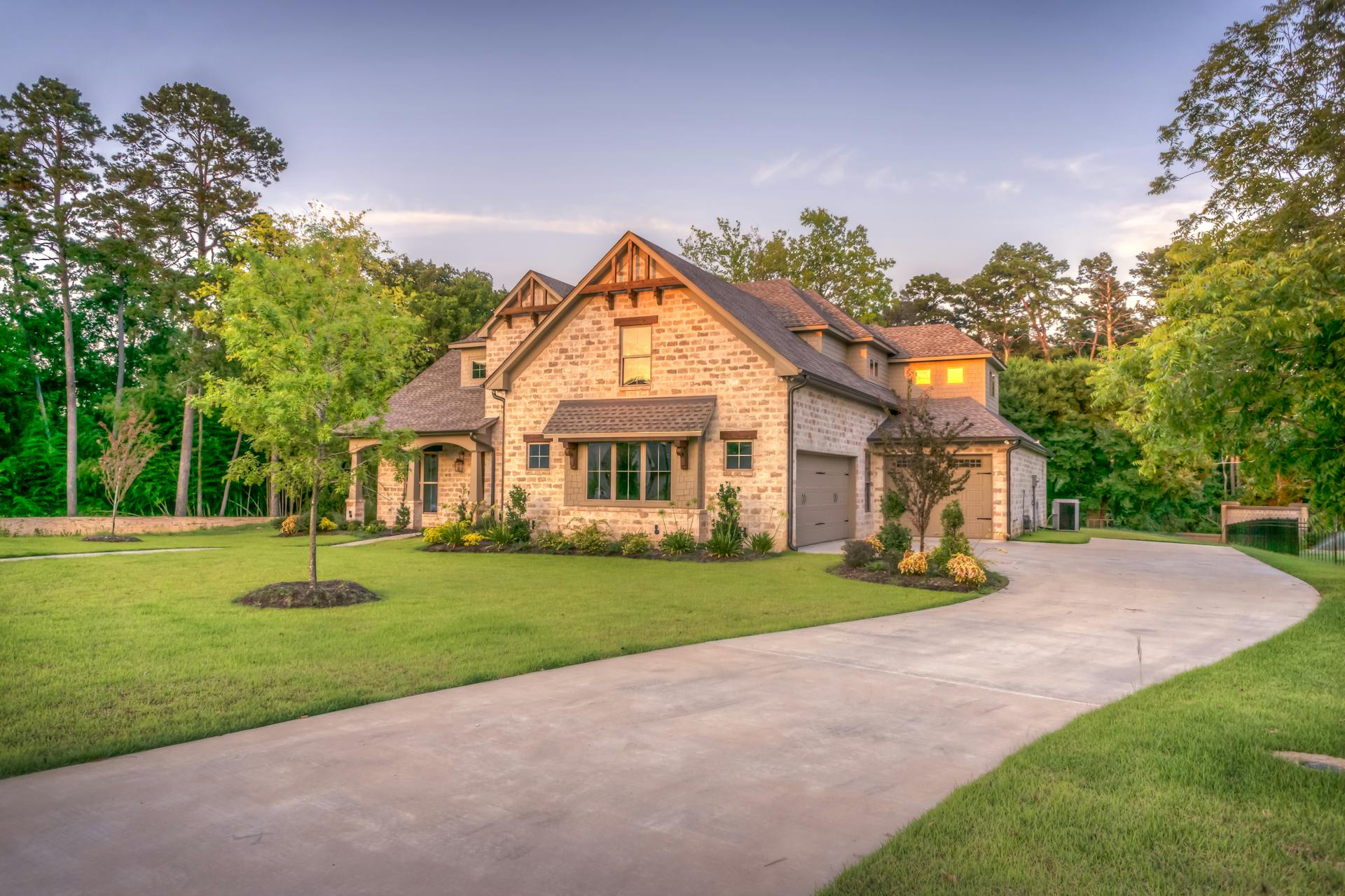
Solar panels for new builds ready for the Future Homes Standard
From March 2027 every new home in England must include rooftop solar covering 40% of the ground floor area. This independent guide explains what that means for housebuilders, developers, architects and self-builders: sizing, costs, compliance, and the questions to put to an installer.
Solar panels for new builds are PV systems designed in at construction phase to meet the Future Homes Standard's 40% ground-floor-area rule. From 24 March 2027, solar panels on new builds become effectively mandatory in England — and fitting new build solar panels during construction costs roughly 20-30% less than retrofitting them later (~£1,200/kWp in-roof at build stage vs £1,565-£1,686/kWp MCS retrofit average).
A guide dedicated to new-build solar
This site covers solar panels for new builds and nothing else. General solar sites and comparison sites treat new-build solar as a footnote to retrofit; here it is the whole subject: how new build solar panels are sized to the 40% rule, modelled in SAP 10.3, priced, installed as part of the construction programme and signed off, with the MCS certificate and handover documents at completion. It is written for everyone from a single architect-led self-build to a large developer framework, and it is published by SEO Dons Ltd, an independent publisher, not an installer.
Solar panels on new builds are no longer optional. Under the Future Homes Standard, every new home in England commencing Building Control from 24 March 2027 must include rooftop PV equivalent to 40% of its ground floor area, with a transitional period to 24 March 2028. There are separate guides for developers and housebuilders and for self-builders getting ahead of the deadline; see new-build solar costs by house type or size your plot with the FHS calculator.
How new-build solar is integrated: in-roof vs BIPV vs on-roof
The integration method is the decision that defines cost and kerb appeal on a new build. Here's how the three options compare at 2026 prices:
| Method | 2026 cost | Best for |
|---|---|---|
| In-roof solar panels | £1,150–£1,290/kWp | Volume housebuilders & most self-builds — flush, cheapest net |
| BIPV / solar roof tiles | £2,400–£3,200/kWp | Conservation areas, listed-curtilage, premium plots |
| On-roof (mounted) | £1,150/kWp | Rarely used new-build — retrofit default |
Are solar panels mandatory on new builds? Effectively yes from 24 March 2027 — the Future Homes Standard sets carbon targets a new home can only meet with solar PV plus a heat pump. Read the 40% PV rule in full →
The Future Homes Standard rewrites how every new build is delivered
On 24 March 2026 the UK Government published the Approved Documents L and F for the Future Homes Standard. From 24 March 2027 — with a 12-month transitional period to 24 March 2028 — every new home in England must:
- 1Include solar PV covering 40% of the ground floor area — typically a 3-4 kWp array on a 3-bed house. Token "2-panel" systems no longer comply.
- 2Use low-carbon heating only — air source heat pumps or heat networks. Gas, oil and "hydrogen-ready" boilers are effectively banned in new builds — the carbon targets cannot be met with them.
- 3Meet the notional fabric and air-permeability spec — fabric U-values carry over from 2021 (wall 0.18 W/m²K notional); air permeability tightens to 4.0 m³/(h·m²) with continuous mechanical ventilation (dMEV) in the notional dwelling.
- 4Demonstrate 75% lower CO₂ vs the 2013 baseline — the previous Part L 2021 uplift delivered only 31%. This is the biggest single tightening since the Building Regulations were created in 1965.
FHS 2026 by the numbers
Every figure on this page is taken from the published Approved Documents L and F (24 March 2026), the FHS Impact Assessment (HM Treasury), and NHBC registration data.
Why FHS-ready procurement starts now, not in 2027
The Future Homes Standard comes into force on 24 March 2027 — but for any developer or self-builder whose project will not break ground before mid-2026, the practical procurement deadline is now. The reasons compound:
- 1 Heat pump and PV supply will tightenIndustry estimates suggest UK ASHP installation capacity needs to scale several-fold by 2027 to meet FHS demand. Bulk panel procurement frameworks negotiated in 2026 secure 2027-28 capacity at locked pricing; spot-procurement into 2027 is widely expected to carry a premium against current rates.
- 2 SAP/HEM assessor capacity is constrainedSAP 10.3 is the sole approved compliance methodology at FHS launch — the Home Energy Model launch was postponed in June 2026, and once approved HEM will dual-run with SAP for at least 24 months before becoming the sole route. Assessor capacity for SAP 10.3 re-accreditation is the near-term pinch point; frameworks signed now lock in modelling capacity at predictable rates.
- 3 Buyer expectations have already shifted42% of new homes completed in Q4 2024 already had solar PV — even before the regulatory requirement. Buyers comparing a 2026 plot without PV against FHS-spec neighbours will see the difference in running costs and in the EPC.
- 4 Programme buffer mattersTransitional protection applies only where a building notice, initial notice or full-plans application is with building control before 24 March 2027 AND that building commences on site before 24 March 2028 — assessed per building. Plots outside that window must build to FHS regardless. Designers starting now have time to optimise spec; designers starting in late 2026 will be working under cost pressure.
For the full regulatory background see our FHS 2026 complete guide and the 2026/27/28 timeline page.
What FHS solar costs by house type
Volume-developer pricing for the FHS-required PV array — separate guides for each size break out the full package cost including ASHP, battery and EV charger.
What FHS-compliant solar looks like on a new build
In-roof systems, BIPV solar tiles, battery storage and heat-pump integration — across volume housebuilder sites, self-build plots and social housing schemes.





Built for both sides of the new-build market
Volume housebuilders need cost certainty, compliance documents and per-plot pricing. Self-builders need a design that works around their architect. There is a guide for each.

Housebuilders, contractors & housing associations
Per-plot pricing for solar, batteries and heat pumps, SAP 10.3 modelling for every house type, and what your structural warranty provider will ask for.
Plot owners, custom build & architects
Getting PV designed in with your architect, timetable and building control body: in-roof, BIPV solar tiles, and pairing with a heat pump and battery.
The 6 questions every new-build buyer and developer asks
How many solar panels do I need on a new build?
For a typical 3-bed semi: 8 panels (3.4 kWp). For a 4-bed detached: 12 panels (5.2 kWp). For a 5-bed executive: 18 panels (7.6 kWp). The Future Homes Standard rule is panel area equal to 40% of ground floor area.
What is in-roof solar?
In-roof solar integrates panels below the tile line — the system replaces the tiles or slates it covers and sits flush with the surrounding roof. The default choice for FHS-compliant new builds at £1,150-£1,290 per installed kWp.
What are solar roof tiles?
Solar roof tiles (BIPV) are individual photovoltaic units replacing conventional tiles 1-for-1. UK 2026 cost: £2,400-£3,200 per kWp installed (vs £1,150-£1,290 for conventional panels). Best for Conservation Areas.
What is the best battery storage for a new build?
Top three for 2026: Tesla Powerwall 3 (13.5 kWh, £6,500, best for backup); GivEnergy All-In-One (13.5 kWh, £5,800, best UK-made); SunSynk modular (5.32 kWh stackable, £3,200, best for matched inverter).
How much does solar cost on a 3-bed new build?
£4,080 for a 3.4 kWp in-roof installation at build stage (~£1,200/kWp, Spirit Energy published basis). £5,320-£6,740 for self-build retail (MCS 2026 averages; offset by 0% VAT). Full FHS package including ASHP and ventilation: ~£10,830 total per plot.
What finance options apply to new-build solar?
New-build solar is zero-rated for VAT as part of new-dwelling construction (Notice 708); the separate retrofit ESM relief is 0% until 31 March 2027 then 5%. Plus self-build mortgage drawdowns, green-mortgage cashback and the £39bn Social and Affordable Homes Programme (2026–2036) funding for social housing.
From volume housebuilders to one-off self-builds
The technologies in an FHS-compliant new build
Guides to each part of a new-build solar system, from in-roof integration to SAP 10.3 compliance modelling.
In-Roof Solar Integration
How in-roof PV is built into the roof during construction, and why it is the usual specification on FHS-compliant new builds.
Learn more →Building Integrated Photovoltaics (BIPV)
Solar tiles, solar slates and PV-glass facades: when BIPV makes sense on a new build and what to check.
Learn more →SAP & HEM Compliance Modelling
What SAP 10.3 compliance modelling involves for a new build, and where the Home Energy Model fits.
Learn more →Developer Procurement Packages
How per-plot procurement of solar, batteries and heat pumps works across a whole site, and what the price should include.
Learn more →Battery Storage Integration
AC-coupled and DC-coupled batteries on new builds: what they add, and how to size one.
Learn more →EV Charge Point Integration
Solar-aware EV charging that diverts surplus PV to the car instead of exporting it.
Learn more →Heat Pump Integration (ASHP)
Pairing solar PV with an air source heat pump: the standard FHS heating package.
Learn more →Solar Panel Maintenance & Servicing
What aftercare a new-build solar system needs: monitoring, servicing and the warranties that apply.
Learn more →Manufacturers you will see on UK new-build specifications
These brands commonly appear in new-build specifications. Before you commit, check the product is MCS-certified and ask your structural warranty provider what it requires for roof-integrated PV.
How solar gets onto a new build, in four stages
Whether it is a single custom build or a large strategic site, the same four stages apply. Knowing who owns each one is what keeps the array from holding up the build programme.
Size against the 40% rule
Start from the ground floor area of each house type: the Part L 2026 notional dwelling carries PV with an area equal to 40% of it. The FHS calculator on this site gives a first estimate.
SAP 10.3 modelling
An accredited energy assessor enters the array, heat pump, fabric and air permeability into the SAP 10.3 calculation to show the emission and primary energy targets are met.
Installation on site
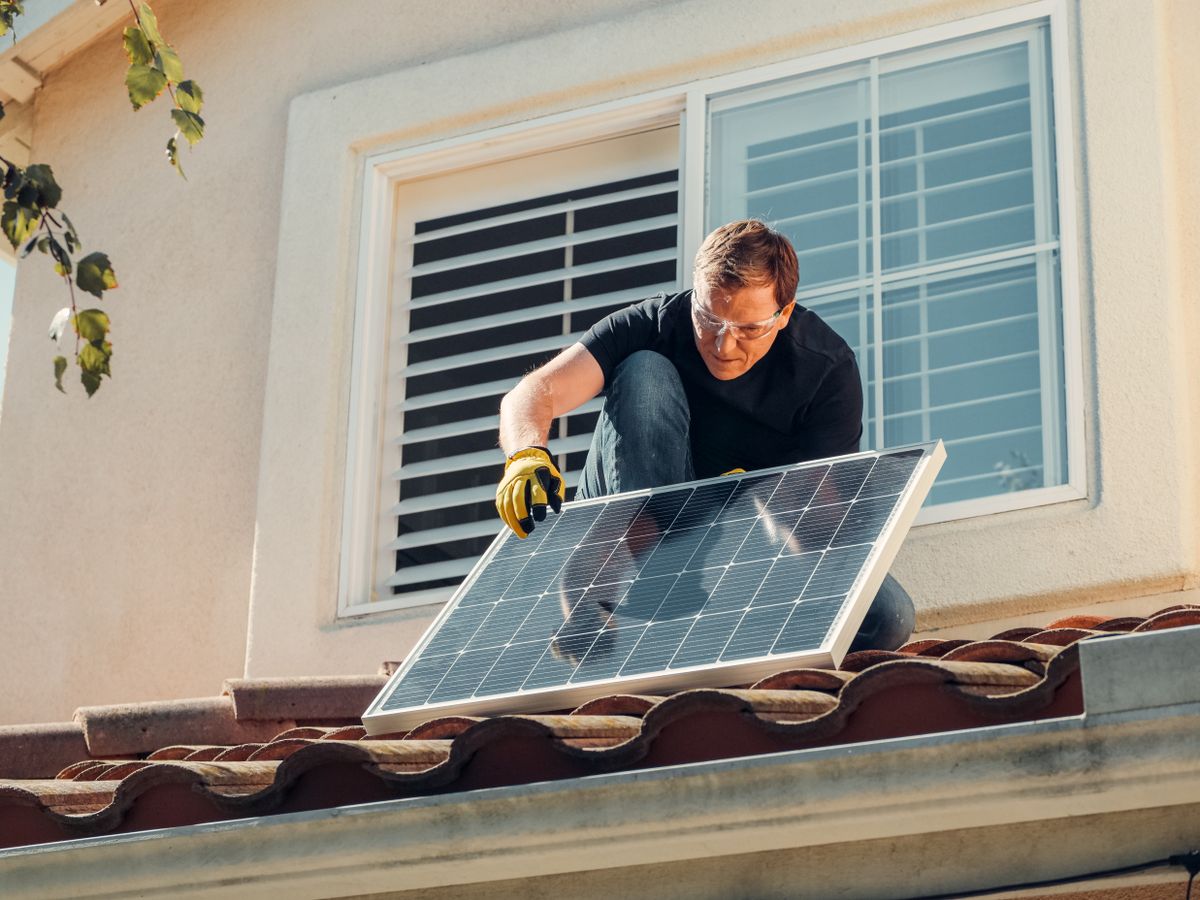
An MCS-certified installer fits the array, in-roof or on-roof, in step with the roofer and the main contractor, and handles the network operator notification (G98) or application (G99).
Sign-off and handover
Building control reviews the as-built SAP. The homeowner receives the MCS certificate (needed for Smart Export Guarantee payments), the EPC and the system documents.
From consultation to enforcement
The Future Homes Standard journey spans 8 years — but the three dates that matter for plot owners and developers are highlighted below.
-
First FHS consultation opened
-
Government response to first consultation
-
Part L 2021 interim uplift
-
Second FHS consultation
-
Home Energy Model (HEM) consultation response
-
Government announces mandatory rooftop solar on new builds
-
Approved Documents L & F published
-
Government postpones Home Energy Model launch — SAP 10.3 sole methodology at FHS launch
-
FHS comes into force in England
-
Higher-Risk Buildings (HRB) provisions in force
-
Transitional period ends — all new builds must comply
FHS-active locations across the UK
Each location guide covers the local planning context, the FHS-relevant development pipeline and the grid (DNO) position for that area.
Solar panels on new builds — the questions every buyer asks
Verified against the published Approved Documents L and F (March 2026) and the FHS Impact Assessment.
When do new builds have to have solar panels in the UK?
How big does the solar array have to be?
Can developers fit a token 2-panel system to tick the box?
Will gas boilers be banned in new builds?
What does the Future Homes Standard cost per home?
Who owns the solar panels on a new build?
Do solar panels invalidate the NHBC warranty?
Are existing homes affected by FHS?
Get a quote for FHS-compliant solar
Share your plot details and a solar installer can price a system sized to the Part L 2026 notional dwelling, with PV area equal to 40% of the ground floor area. There is no obligation to go ahead.
- ✓ Sized to the 40% ground-floor-area rule
- ✓ For developer programmes and one-off self-builds
- ✓ Check any installer against the MCS register before you sign
Request a quote
A few details about the plot help an installer price it accurately.