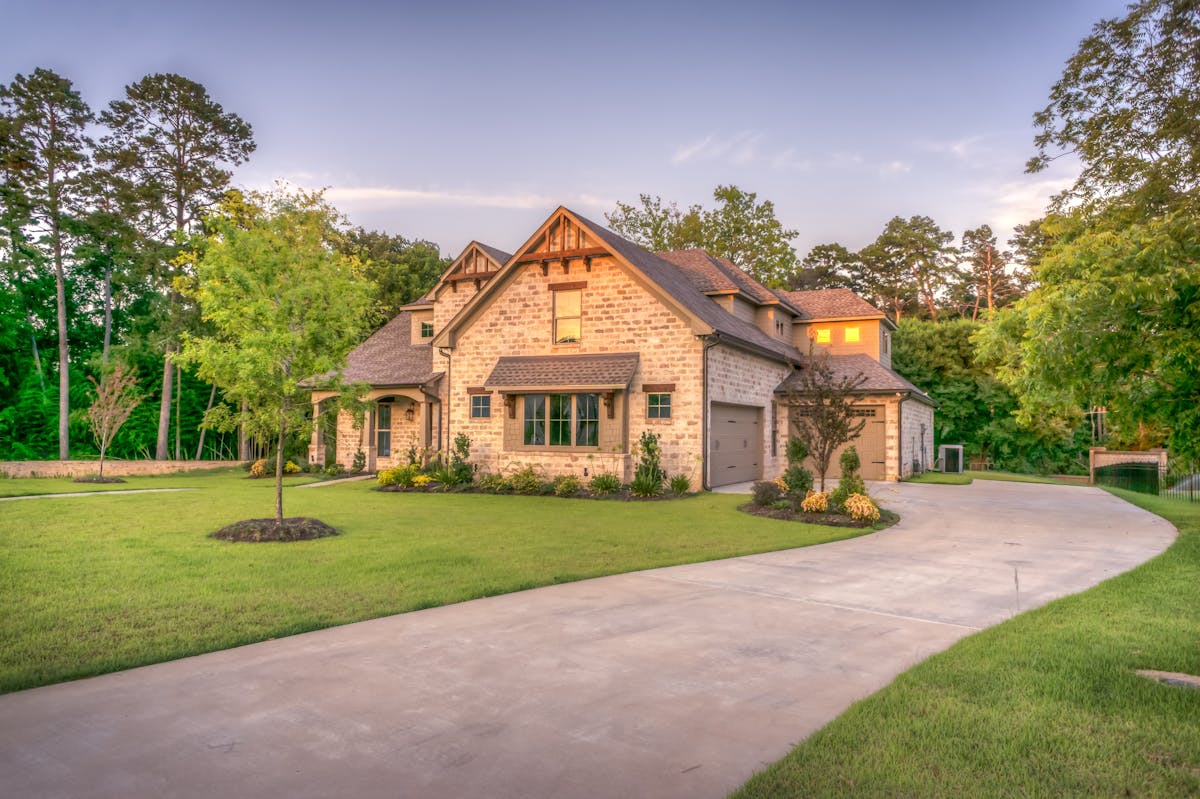
Cotswolds Conservation Area replacement dwelling — UK new build solar PV installation
BIPV self-build · Cotswolds AONB

Cotswolds Conservation Area replacement dwelling

GB-Sol PV Slate BIPV system invisible from street elevation

5.2 kWp
PV size
GB-Sol PV Slate
BIPV product
PD-approved
Planning consent
178
Slate count

GB-Sol PV Slate BIPV system on a Cotswold stone replacement dwelling. 5.2 kWp generation, invisible from street elevation. Approved under permitted development with pre-application planning advice.

The brief

A Cotswolds AONB plot near Stow-on-the-Wold with a tired 1960s detached bungalow being demolished and replaced with a 240 m² 4-bed dwelling under the Permitted Development "replacement dwelling" provisions. Conservation Area constraints required the replacement to read as a traditional Cotswold stone home — a conventional panel solar array would not have been acceptable to the Local Planning Authority or to the AONB management board. The clients wanted FHS-compliant generation invisible from the public realm.

Pre-application planning approach

Pre-application meeting with the Cotswolds AONB planning officer and the District Council's conservation officer in Q3 2025. Presented three options: (a) conventional panel array on rear-only east-facing roof — likely to refuse; (b) Marley SolarTile in-roof on rear elevation — possible but visually identifiable as solar; (c) GB-Sol PV Slate BIPV matching surrounding stone slate — preferred. Option (c) approved in principle with conditions on slate colour matching and ridge detail. PD approval secured Q4 2025 with no planning consent required for the BIPV system itself (covered by the dwelling's replacement consent).

BIPV system specification

GB-Sol PV Slate BIPV system on the rear-facing south-east-pitched roof — 178 slates totalling 5.2 kWp. Each slate measures 600×300 mm and contains an integrated 29 W PV cell. Visual profile identical to the surrounding natural Welsh slate (matched in pre-installation samples on a mock-up panel). Inverter (SolarEdge HD-Wave 5 kW) located in the plant room. Battery: 10 kWh GivEnergy. ASHP: 7 kW Mitsubishi Ecodan with 250L cylinder.

Installation and weatherproofing

BIPV slate installation took 4 days (vs 1.5 days for an equivalent panel array) — slates installed individually with weatherproofing membrane between courses, electrical interconnect routed under each course, junction box concealed in the rear elevation chimney void. 5-year weather warranty from GB-Sol and 25-year power-output warranty (matching panel-system industry standard). NHBC Buildmark warranty accepted the system without query at first technical review.

Cost comparison

BIPV slate installed cost: £14,200 (£2,730/kWp installed). Conventional in-roof panel cost for equivalent kWp: £6,200 (£1,190/kWp installed). Net BIPV premium: £8,000. Offsetting saving: the BIPV slates replaced ~33 m² of natural Welsh slate roofing (£2,200 worth) and the labour cost of installing that roofing (£1,800). Net financial premium over panel-array option ~£4,000. Total compliance premium covered by the 0% VAT on new-build dwellings.

Outcomes and planning template

Replacement dwelling completed on programme Q1 2026. BIPV invisible from street elevation — surveyed at 30m, 50m and 100m distances by the conservation officer at sign-off, no PV system identifiable. Generation 5,200 kWh/yr (vs modelled 5,400 — 4% under, attributable to a higher than expected number of overcast days in 2026). Self-consumption 68%. The AONB planning officer has since cited the project as a template for replacement-dwelling consents in other Conservation Area parts of the AONB — three subsequent similar consents granted in the area in 2026.

40% of ground floor area
PV / ground floor area
Mar 2027
FHS in force
75%
CO₂ vs 2013 baseline
£4,350 per dwelling
Per-plot premium
For self-builders and architects

The bipv self-build segment for one-off custom builds

Engagement from RIBA Stage 2. PV sizing collaborative with the architect. SAP/HEM modelling that gives the architect freedom on glazing ratios and roof geometry. Building Control submission pack ready for the Approved Inspector. 0% VAT on new-build dwellings. Staged invoicing aligned to your self-build mortgage drawdowns. We work with custom-build buyers across England, Wales and Scotland.

How this fits into the FHS compliance pathway

Every FHS-compliant new build must pass three regulatory gates. The bipv self-build segment fits primarily into the second gate — design-stage Part L compliance — but has knock-on implications for Building Control sign-off and post-completion warranty:

  1. 1
    Planning permission Most solar PV on new dwellings is consented within the dwelling\'s primary planning consent. Conservation Areas, Article 4 directions and listed-curtilage plots require additional planning consideration — we handle the planning evidence required for these.
  2. 2
    Building Control — Part L compliance SAP 10.3 or HEM compliance modelling demonstrating Dwelling Emission Rate ≤ Target Emission Rate. PV specification, ASHP capacity, fabric U-values and air permeability all entered into the modelling. We provide the full compliance file ready for the Approved Inspector.
  3. 3
    Post-completion — warranty & EPC MCS certificate, EPC, monitoring app onboarding and 20-year insurance-backed workmanship warranty. NHBC, LABC, Premier and Buildmark all accept our installation specification without query — important if you\'re relying on a structural warranty for buyer mortgageability.

For a fuller walkthrough of the compliance process, see our Part L 2026 page and the FHS PV calculator which sizes a compliant system from your ground floor area in 30 seconds.

Frequently asked

Self-build questions

Answers to the questions we get most often when discussing the bipv self-build segment with new clients.

Can I self-build a home that exceeds FHS specifications?
Yes — and the marginal cost of exceeding FHS is small relative to the long-term running cost benefit. A typical "FHS-plus" self-build specification: 6 kWp array (vs 3.4 kWp minimum on a 3-bed), 13 kWh battery, air permeability target 1.5 (vs FHS 3), PassivHaus-style thermal bridging detail. Capital premium over FHS minimum: £8,000–£12,000 on a £400k build budget. Running cost saving: ~£500/year, plus a clear EPC band A rating that adds 4–6% to resale value at 2026 prices.
Will my Approved Inspector understand FHS — or will Building Control sign-off be slow?
Approved Inspectors and LABC officers across England have been training to the FHS dual-route (SAP and HEM) compliance pathway since the consultation response in Q4 2025. Most are now confident on Part L 2026. The slowest area is HEM modelling — the new dynamic simulation engine has a steeper learning curve than legacy SAP. Most submissions in 2026 are being filed under the SAP 10.3 route during the transitional period, with HEM adoption growing through 2027.
When does the Future Homes Standard come into force?
24 March 2027 in England, with a 12-month transitional period running to 24 March 2028 for projects already under construction. The Approved Documents L and F were published on 24 March 2026 (Government statement HCWS1445), giving the industry exactly 12 months of certainty before regulatory commencement. Scotland, Wales and Northern Ireland are following with broadly equivalent regulations on roughly aligned timetables, although devolved nuances apply — Welsh regulations are typically 6 months ahead.
What does FHS-compliant solar PV actually cost per plot?
The Government Impact Assessment puts the total FHS premium at ~£4,350 per dwelling per dwelling (2025 prices, weighted average across heat pump, solar PV, MVHR and enhanced fabric). Of that, solar PV is roughly £4,200 — covering ~3.4 kWp for a typical 3-bed semi (panels, in-roof mounting, inverter, monitoring, MCS certification and 20-year insurance-backed warranty). Larger dwellings cost proportionately more; volume procurement reduces per-plot cost by 20–25%.
FHS 2027 deadline approaching

Get an FHS-compliant solar quote in 48 hours

Tell us your plot details — ground floor area, location and target start-on-site date. We return a fully-costed system sized to Part L 2026 (40% PV rule), with the SAP/HEM compliance pack included.